01
Gross Revenue
From an operator who owns four — and has sold over a hundred. Where to find them, how to read the numbers, how to structure the deal, how to get seller financing without a bank.
Before location, before price, before financing — what kind of wash is it? Because the type decides your payroll, and payroll is everything.
The car wash business is the payroll business. If you can eliminate bodies at the car wash, that's straight profit into your pocket.
There are three models that actually trade. Full-service mechanical hand wash — premium pricing, customers stay in the lounge, but every car needs hands on it, and the payroll lands around 45% of revenue. Full-service tunnel — machinery does most of the work, two or three guys finish each car, payroll runs 35–40%. Express exterior — customers vacuum themselves, two employees on shift, payroll 15–20%.
The big private-equity money is buying express. Not because express washes are nicer — because the math is better. You're paying multiples on cash flow, and cash flow is what's left after payroll. The Northeast still skews full-service because the legacy is there and the customers expect it; that creates the opportunity to either buy a wash that converts well, or to buy and operate one as is and trade the labor headache for higher ticket.
Owners do not list. They get approached. The brokers who win are the ones who knock first and pitch second.
You're not going there to buy the car wash. You're going there to see if the owner wants to expand. If you go in trying to sell the car wash, he's going to shut you down immediately.
Pull every wash within a 30-mile radius off Google Maps. Drive each one. Note who's busy on a Friday afternoon, who has a beat-up sign, who's running an old tunnel. Walk in dressed up, hand the manager your card, and ask for the owner. When you get him, don't pitch a buy — pitch expansion. "I have other locations in your area. If you ever think about expanding, give me a call." Half the owners who actually want to sell will tell you on the spot.
There are four channels worth running in parallel — and a handful more if those run dry. In rough order of speed:
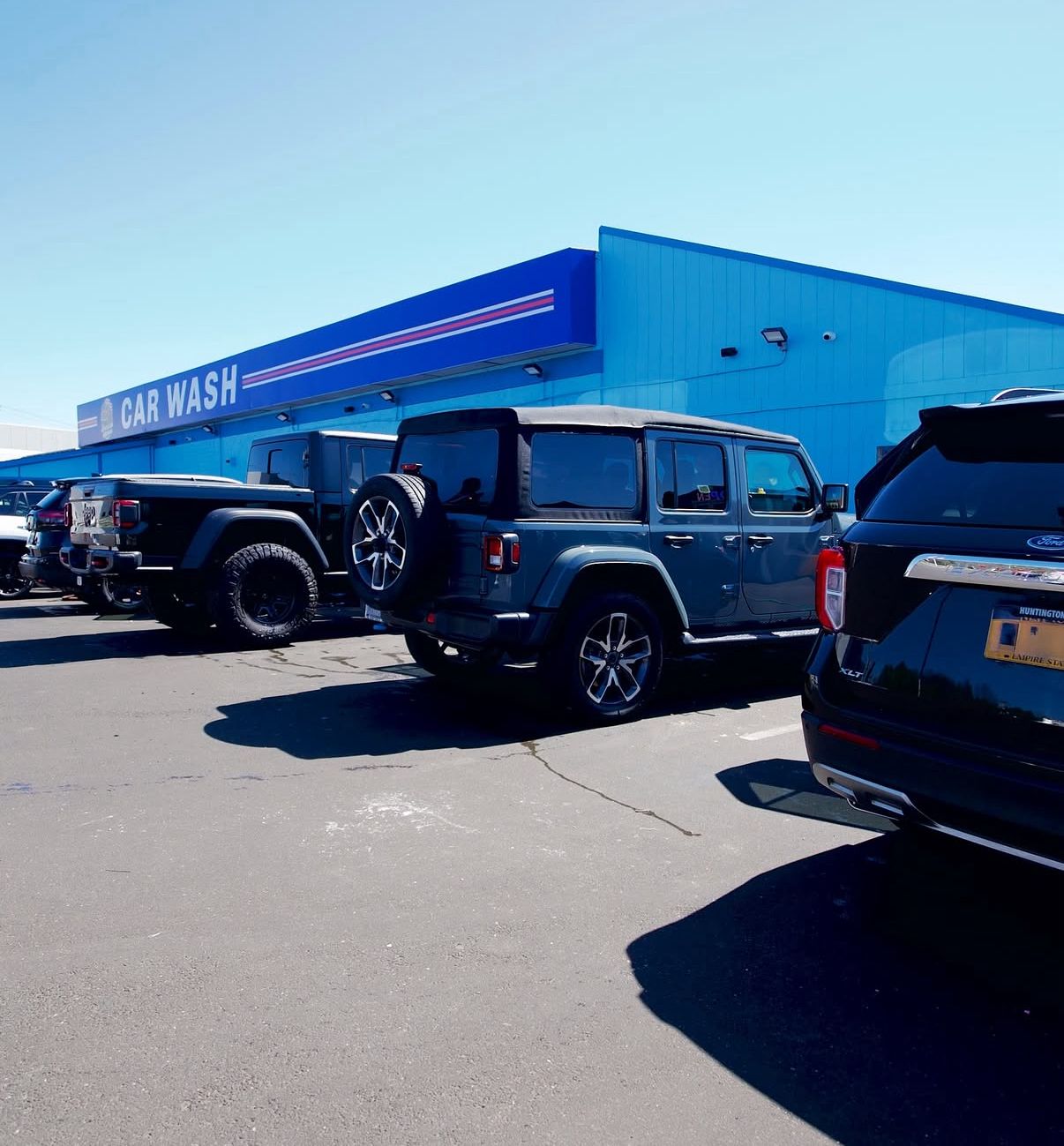
The three numbers that decide whether a wash works — before you read a single P&L.
If you're going 60 miles per hour down a road, it's gonna be hard to stop at a car wash. 35–40 mile per hour roads with about 30 to 40,000 vehicles per day — that's a very good statistic.
Three numbers, in this order. Speed limit: 35–40 mph is the sweet spot. Above that, drivers can't make the turn-in decision fast enough. Traffic count: 30,000–40,000 vehicles per day. You can pull this off your state DOT in 10 minutes. Conversion: roughly 1% of cars passing convert on a busy day. So 30,000 cars × 1% = 300 washes × $30 ticket = a $9,000 day. That's the unit economic.
The fourth number is not a number — it's a corner at a light. When a driver is stopped at a red, they see your wash. They've been trained to see it. A corner-at-a-light parcel commands a premium for a reason that isn't on any spreadsheet — it's behavioral. If you're choosing between two washes at the same multiple, the corner-at-a-light is always the buy.
Books and bank deposits get massaged. The eye in the tunnel doesn't.
The POS system can't lie. There's an eye in the tunnel when a car goes through, there's no way of deleting that. So if someone tried to void the numbers, you can easily tell.
There are five or six car wash POS systems that actually trade — DRB, ICS, Sonny's, WashTec, ICR. All of them have a tunnel sensor that counts every car independent of the cashier. The car count from the POS is the ground truth. Books-and-records won't match — this is a cash-heavy industry and 99 out of 100 sellers run some piece of it personally. That's not the issue. The issue is whether the gross sales the seller is claiming are within striking distance of what the POS says happened.
Once you have the gross, back into payroll. Count guys on a Friday. Count guys on a Tuesday. Multiply by minimum wage and the hours they work. Add 15% for workers' comp on top. That number — not the seller's payroll claim — is your real labor line.
And remember: there are about 300 business days in a year. When it rains, the wash closes. Holidays close it too. So a "we do $9K days" claim has to be averaged across roughly 300 days to get to annual gross. If a seller is annualizing off 365, his number is 22% inflated before you even start.
A real-world car wash we worked: gas was understated by 120%. Water by 50%. The "net income" dropped a full margin point once we ran the actual numbers.
A 2025 Brooklyn wash we ran due diligence on listed gas at $4,500/yr in the seller's pitch. The actual 24 months of utility bills came back at $10,000–$11,000/yr — Northeast winters heat the building and the water heaters work overtime. Water and sewer was listed at $7,800; actual was $11,000–$13,000. Net income fell from a published $292K to $278K once we reconciled. That's a full margin point and it changes the multiple you should pay.
The two-times-revenue rule died ten years ago. Here's the modern math, and the rent trap that makes a great-looking multiple worse than a bad one.
The valuations go based on a four to six time EBITDA. So if a business was making $500,000 a year, true cash flow, it would be worth anywhere from 2 to 3 million.
EBITDA is earnings before interest, taxes, depreciation, and amortization — net cash flow before financing. Full-service washes trade at 4–6×. Modernized tunnels (newer equipment, membership program, clean P&L) push to 7×. Express in the right market can clear that. The number you pay isn't the listed multiple — it's whatever multiple survives after you normalize the rent and the labor.
A wash lists at $1.21M annual sales with $372K SDE — that's "11.0× as-is" if you read the rosy version. But the seller is the landlord and is paying himself zero rent in the P&L. Add fair-market rent of $90K/yr back in, and SDE drops to $282K. Now the same asking price is 8.4× on a normalized owner-operator basis.
An 11× wash that's actually 8× is fine. An 8× wash that's actually 5× is a steal. A 5× wash that's actually 9× because the seller hides rent in the cap table is the deal that bankrupts you. Always normalize to fair-market rent before you compare anything.
The boring structural decisions that decide whether a clean P&L is also a clean transfer.
Asset purchase, not stock. Buy the wash, the equipment, the customer list, the brand. Don't buy the legal entity — you'll inherit every undisclosed lawsuit, tax lien, and employment claim. Asset deals also let you re-elect on depreciation, which materially helps year-one taxes.
Real estate: separate, parallel. If the seller owns the dirt, do two transactions side-by-side — the operating asset deal and the real-estate purchase or new ground lease. Don't blend the prices. Don't agree to a single number until both halves are negotiated independently. If you can't buy the real estate, lock a long lease (10+ years, two 5-year options) with capped escalators before you close on the business.
Working-capital peg. Set a target net working capital at close (inventory, receivables, deposits, prepaids). Anything above the peg, you pay extra; anything below, the seller credits you. Without a peg, sellers strip the wash of supplies and chemicals the day before close.
Indemnity escrow. Hold back 10% of the purchase price for 12–18 months against undisclosed liabilities, tax true-ups, environmental issues. On a wash, environmental matters — separators, recovery systems, soil contamination. Do not skip the escrow.
Seller paper is normal in this industry. Banks don't love car washes — but the seller does, because the seller built it.
This is such a cash-heavy business, it's very hard to finance these transactions. So we go through a seller financing — 50% down, 50% over seven to ten years. That's really the term for car washes.
Why sellers say yes: capital-gains spread plus interest income. A seller who takes all cash gets taxed at one bracket; a seller who takes installments spreads the gain across the term and earns 7–10% on the note in the meantime. For a 65-year-old owner who needs retirement income, that's a feature, not a bug.
How to ask: not on the first call. Build rapport across two or three meetings. When you're ready, frame it as solving the seller's problem — "if we structure with seller financing, you're getting your asking price, you're getting installment tax treatment, you're earning 8% on the note, and we're keeping the wash in operator hands you trust." Then propose a term sheet, not a verbal.
What to push for:
Not for everyone. But it exists, and it's how some of the best modernizations get financed.
If you're buying a tired full-service wash and converting it to express, the largest line item in your conversion budget is the new tunnel — typically $400K–$700K depending on length and packages. A growing pattern: tunnel manufacturers will contribute the equipment as equity into the deal in exchange for a minority stake.
Real example we've underwritten: a $5.5M acquisition with a tunnel manufacturer contributing $550K of equipment for 10% equity. Day-one underwritten value at the post-conversion run rate: $10M. The manufacturer wins on installed-base growth and an exit multiple they couldn't get otherwise. The buyer wins on a conversion they couldn't otherwise afford. Both sides agree on a 36-month exit valuation anchor: greater of (a) underwritten value, (b) third-party offer, or (c) 7× trailing-twelve EBITDA.
It's not a fit for every operator — you're taking on a partner with governance rights — but if you're a first-time buyer trying to do a modernization deal, it's worth knowing the shape of the structure before you walk into the conversation.
A wash with a real membership program is not the same asset class as a wash without one — even at the same revenue.
Unlimited monthly plans plus pay-per-wash hybrid is the modern revenue model. Why it matters at exit: a wash doing $1.5M in transactional revenue trades at 4–6× EBITDA. A wash doing $1.5M with 60% of revenue under unlimited memberships trades at 6–7×. Same revenue, different multiple, because the buyer is buying contracted MRR with predictable churn — that's a different risk profile.
If you're buying a wash with no membership program, that's not a negative — that's an upside lever. Year-one playbook: install a membership program, target 30% of car count on unlimited within 18 months, exit at the re-rated multiple in year three to five.
This is the same intake form we fill out on every car wash listing we represent. Three of the lines below are the ones first-time buyers always miss.
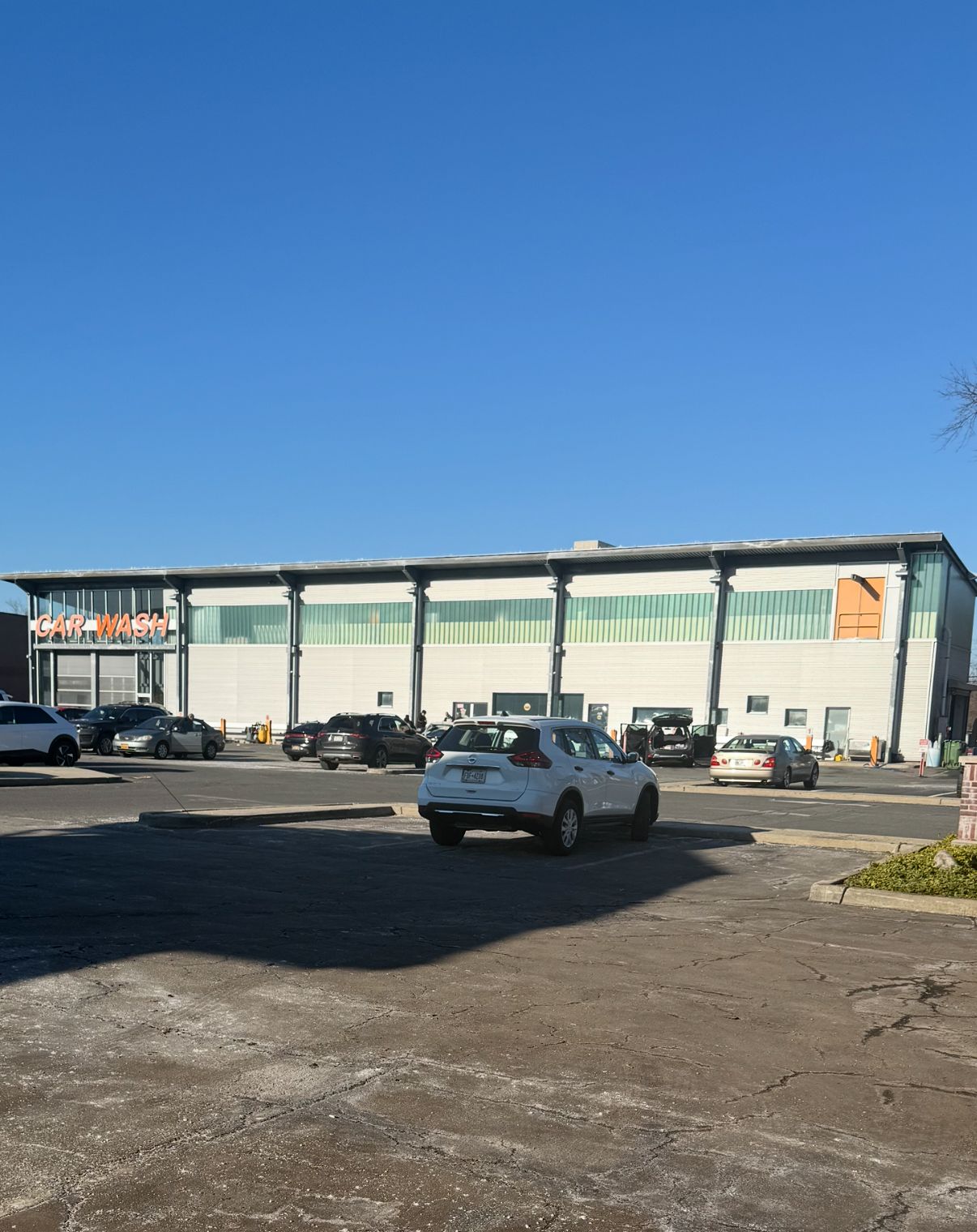
Operational and structural items that don't show up in the financials but decide whether the wash transfers cleanly.
You arrive at 11am on a Friday. You park across the street and you count every car that turns in for one full hour. You note how long each car spends in the tunnel and how many guys are working. You note whether the membership scanner is being used or whether everyone is paying retail.
At 12, you walk in and ask the manager for the owner. While you wait, you walk the tunnel — look at the chain, the mitters, the dryers, the floor, the recovery pit. You look at the customer area — is it clean, is the membership signage visible, is there a self-pay kiosk that works?
When the owner shows up, you don't pitch a buy. You ask "how's business?" and you let him talk for ten minutes. Then you ask if he's ever thought about expanding — or, if the read is right, about stepping back. You hand him your card. You leave.
That visit told you more than any financial statement will. Whether the financials match what you saw is the next conversation.
No pitch funnel, no automation, no scheduler links. I read every submission myself. If you have a wash in mind, expect a reply within 24 hours.
I'll be in touch personally. If you said you have a wash in mind, expect a reply within 24 hours. — Michael